The Importance of Tuckpointing
Summary
- Mortar is softer than brick and wears down over time, particularly in climates with hard winters and significant freeze-thaw cycles.
- Tuckpointing involves grinding out deteriorated mortar joints and packing in fresh material matched to the existing masonry in color, texture, and strength.
- Common signs a home needs tuckpointing include recessed or crumbling joints, efflorescence on the brick face, cracks along mortar lines, and interior moisture on exterior walls.
- Delaying the repair allows water infiltration to worsen each season, eventually damaging the brick itself and turning a targeted repair into a larger, more expensive project.
What Is Tuckpointing and Why Does Your Brick Home Probably Need It?
Mortar joints don’t last as long as the bricks they hold together. Mortar is softer than brick, which means it absorbs the stress of seasonal movement, moisture, and freeze-thaw cycles rather than transferring that stress to the masonry itself. In Central Illinois, where hard winters and significant temperature swings are the norm, mortar wears down faster than it would in milder climates. Tuckpointing is the process of removing that deteriorated mortar and packing fresh material into the joints, restoring the seal and the structural integrity of the wall. Most brick homes need it at some point, and many are overdue.
Why Mortar Deteriorates
Freeze-thaw cycles are the primary culprit in Central Illinois. Rain and snowmelt work their way into porous mortar joints, and when temperatures drop, that trapped moisture expands as it freezes. Over enough winters, the joints crack, crumble, and begin to pull away from the brick. The damage is cumulative, meaning each season builds on the last.
Age is a factor independent of weather. Mortar has a finite lifespan, and in older homes that haven’t had masonry maintenance, joints that were installed decades ago may simply be past the point where they can do their job. Settlement and structural movement add another layer, particularly around corners, window openings, and transitions between materials, where stress concentrates and mortar cracks appear first.
Poor original installation can also accelerate the timeline. Inconsistent mortar mixes or joints that weren’t packed properly tend to fail earlier than well-executed work, leaving gaps that water exploits long before the rest of the wall shows its age.
What Tuckpointing Actually Involves
Tuckpointing starts with removing the old mortar, not covering it over. Force Masonry uses precision tools to grind out the deteriorated joints to a consistent depth, which clears away the compromised material and creates a clean surface for the new mortar to bond to. Skipping this step and applying fresh mortar over failing joints is a common shortcut that produces repairs that don’t hold. The full process breaks down into four steps:
- Inspection and assessment: The wall is evaluated to determine where mortar has failed, what’s driving the deterioration, and how deep the damage goes before any work begins.
- Mortar removal: Deteriorated mortar is ground out using precision tools, creating a clean channel that allows the new material to bond properly to the brick.
- Fresh mortar installation: New mortar is packed into the joints by hand, matched in color, texture, and strength to the existing masonry so the repair integrates with the surrounding wall.
- Finishing and cleanup: Joints are finished consistently across the repaired area, the surface is cleaned, and the work is inspected before the job is considered complete.
The process applies wherever mortar has failed, whether that’s an exterior wall, a chimney, a retaining wall, or the foundation line. Each location has its own exposure conditions and stress patterns, but the core approach is the same: remove what’s failing, replace it correctly, and leave the structure better protected than it was before.
Contact Force Masonry Construction
Signs Your Brick Home Needs Tuckpointing
Most homeowners notice something is off before they know what to call it. The mortar between bricks looks recessed or uneven, there’s a chalky residue on the wall, or a section of joints has started to crumble visibly. These are the most common indicators that tuckpointing is overdue, but some of the clearest signs show up inside the home rather than on the exterior wall.
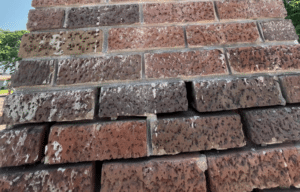
- Recessed or crumbling mortar joints: Joints that have worn back from the face of the brick or are visibly crumbling are past the point of surface wear and need to be ground out and replaced.
- White staining on the brick face: Efflorescence, the white chalky deposit that appears on brick surfaces, is caused by water moving through the wall and carrying salts to the surface. It’s a reliable indicator that moisture is getting into the joints.
- Cracks along the mortar lines: Hairline cracks that follow the mortar pattern rather than cutting through the brick itself point to joint failure rather than a structural crack in the masonry.
- Water stains or damp patches inside: Interior moisture along an exterior brick wall often traces back to failed mortar joints allowing water to penetrate.
- Drafts near brick walls or window surrounds: Air movement through deteriorated joints around windows and corners is a sign that gaps have opened up enough to affect the building envelope.
Any one of these warrants a closer look. Several of them together usually means the work is already overdue.
The Cost of Delaying Tuckpointing Repairs
Once joints have cracked or crumbled, water gets in more easily, and each freeze-thaw cycle opens the gaps further. What starts as a straightforward tuckpointing job can progress to spalled or damaged brick faces, which require replacement rather than repointing. At the foundation line, failed mortar joints create a direct path for water intrusion into the structure below.
The cost difference between catching mortar deterioration early and addressing it after the brick itself is damaged is significant. Tuckpointing is a targeted repair. Brick replacement, chimney rebuilds, and foundation repairs are larger projects that tuckpointing, done at the right time, can help you avoid. Force Masonry’s approach is to assess the full extent of the damage honestly and recommend what’s actually needed, whether that’s tuckpointing alone or a combination of repairs, rather than defaulting to the more expensive option.
Get a Free Tuckpointing Estimate from Force Masonry
Force Masonry has been restoring brickwork across Central Illinois for over 40 years. Whether the damage is on an exterior wall, a chimney, a retaining wall, or at the foundation line, the team assesses the full picture before recommending any work. Every job starts with an honest evaluation and a clear explanation of what needs to be done and why.
If your brick is showing any of the signs above, contact Force Masonry Construction to schedule your free estimate.