Stop Structural Damage, Smoke Problems, and Fire Risks at the Source A cracked or leaning chimney puts the surrounding structure and the safety of the home at risk. Water finds its way through cracked masonry into the roof structure and attic below it. A leaning stack shifts weight onto a roofline it was never built to carry. A damaged or blocked flue lets smoke and combustion gases drift back into the living space. Force Masonry Construction rebuilds damaged sections, restores mortar joints, and corrects leaning or unstable chimneys. Whether the damage is structural or limited to the surface, each repair targets the specific cause behind it. An inspection identifies exactly what’s failing before any work begins.
Chimney Repair in Central Illinois
What Causes Chimney Damage in Central Illinois
Central Illinois sees roughly 116 days a year with temperatures dropping below freezing, according to Illinois State Climatologist data drawn from NOAA climate normals, and a good share of those cold snaps land in March and November, when daytime highs still climb into the 40s and 50s. Water that gets into a mortar joint or a crack in the brick freezes overnight and expands, then thaws again once the temperature climbs back up. Repeated across dozens of cycles each year, that expansion and contraction widens joints, loosens brick, and works masonry apart from the inside.
Most of this damage happens above the roofline, out of the sightline from the ground or from inside the house. A chimney can go through several winters of freeze-thaw cycling before a crack, a leaning stack, or water inside the flue becomes visible from below. By the time damage shows up at eye level, the deterioration driving it has usually been building for a while.
Signs of Chimney Damage in Central Illinois
A chimney doesn’t fail without warning. It shows itself through cracks, stains, smoke, rust, and other physical changes you can see or smell. Paying attention to those changes is how you know something needs a closer look.
Cracked or Missing Bricks
Chips, gaps, or crumbling edges appear along the brick face, and small chunks sometimes go missing near the top of the stack where weather exposure is greatest. The rough or pitted texture spreads gradually across more of the surface each season. Left unaddressed, cracked brick keeps letting water into the wall itself, and freeze-thaw cycling works those joints apart from the inside until a few damaged bricks becomes a section that needs to be rebuilt rather than patched.
Leaning or Separation from the Roofline
A gap opens between the chimney and the roofline, or the stack visibly tilts away from the house when viewed from the yard. The separation tends to widen slightly with each passing season rather than staying the same. Left unaddressed, continued leaning shifts weight onto roof framing that wasn’t built to carry it, and a stack that could have been stabilized in place eventually has to come down and be rebuilt.
White, Chalky Staining on the Brick
A powdery white deposit forms on the brick face, often heavier after a stretch of rain. It brushes off easily but returns within a few weeks in the same spot. Left unaddressed, that same moisture path keeps carrying water through the masonry, and each winter it freezes in place and widens the joints it’s traveling through.
Rust Inside the Firebox or on the Damper
The damper plate or firebox metal develops a rough, orange-brown coating, and the damper may start sticking or resisting when it’s opened or closed. Metal that would otherwise hold up for years corrodes faster once it’s exposed to persistent moisture. Left unaddressed, water reaching the damper means it has already reached the flue itself, and a flue exposed to that much moisture across multiple winters is more likely to develop cracking in the liner.
Smoke or Odor From the Fireplace When It’s Not in Use
Smoke backs up into the room instead of drawing up the chimney, or a smoky, sour smell lingers near the fireplace even when there’s no fire burning. The smell tends to get stronger on damp or humid days. Left unaddressed, combustion gases keep finding their way into the living space instead of the flue every time the fireplace is used.
Discoloration or Bubbling on Nearby Walls and Ceilings
Paint peels or bubbles, or a stain spreads across the wall or ceiling nearest the chimney, sometimes in rooms with no fireplace of their own. The affected area tends to grow a little with each rain rather than staying the same size. Left unaddressed, water that has already passed through the chimney structure keeps reaching the framing and drywall behind that stain, adding to the damage with every rain until that material has to be replaced along with the repair.
Chimney Services in Central Illinois
Chimney Inspections
An inspection covers the full chimney system from the firebox to the crown, checking mortar joints, the flue liner, and the connection points where the chimney meets the roofline. A camera scan can reach sections of the flue that aren’t visible from either end. The findings determine which of the services below actually apply to your chimney.
Chimney Cleaning
Cleaning removes creosote and soot buildup from the flue using brushes and vacuum equipment sized to the flue’s shape and diameter. Buildup left in place restricts airflow and adds fuel that can ignite inside the flue itself. A cleaning also clears out animal nests or debris that may have collected in an unused chimney.
Chimney Repairs
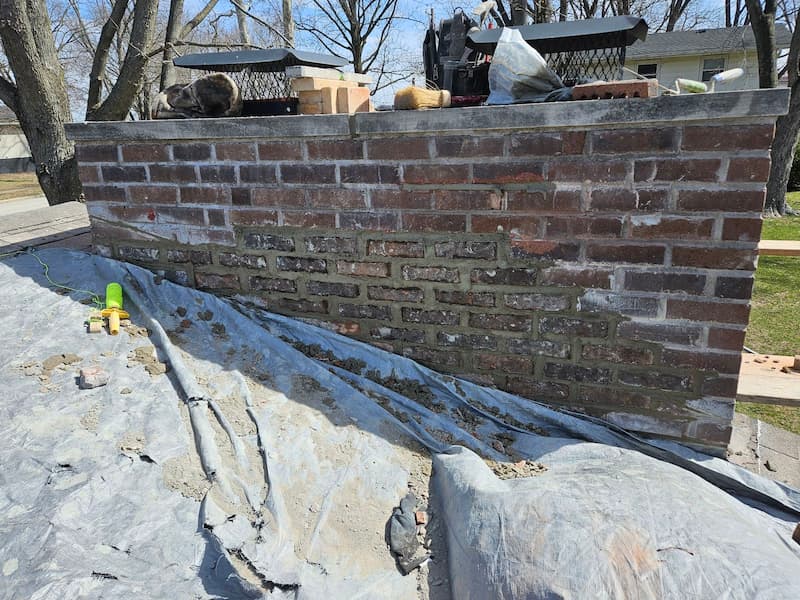
Repairs address cracked or missing brick, deteriorated mortar joints, and cracks that let water into the structure. Tuckpointing replaces failed mortar joint by joint without disturbing the surrounding brick. Sections with more extensive damage get rebuilt using matching brick and mortar rather than patched over.
Chimney Relining
Relining installs a new flue liner inside the existing chimney, sized to the specific appliance or fireplace it serves. The liner protects the surrounding masonry from heat and combustion byproducts, and replaces a liner that’s cracked or was never installed to current standards. This work happens from inside the flue, so the exterior masonry isn’t disturbed.
Caps and Dampers
A chimney cap keeps rain and snow out of the flue while blocking birds and animals from getting in. A damper controls airflow when the fireplace isn’t in use, and a damper that’s rusted or bent gets replaced so it seals properly again. Both are installed or repaired without affecting the rest of the chimney system.
120 Years of Combined Masonry Experience
Force Masonry Construction’s team has 120 combined years of experience working with brick, stone, and block across Central Illinois. That includes chimneys built decades apart, in different styles, and maintained under different code standards over the years. Brick and mortar behave the same way whether they’re part of a wall or a chimney stack, and that experience carries directly into chimney work.
Schedule Your Chimney Inspection in Central Illinois
A chimney with cracked mortar, a rusted damper, or a damaged flue liner doesn’t perform the way it should, and that shows up as smoke backing into the room or a chimney that doesn’t draft properly. Getting it inspected tells you exactly what’s happening before you use the fireplace again.
Force Masonry Construction offers free estimates for chimney repair throughout Central Illinois. Schedule a visit to find out what your chimney needs.


Service Area
Not close by? That’s OK! Call now and we can set up an appointment to meet with you or discuss your project by phone.
Atlanta • Bloomington • Brimfield • Canton • Chillicothe • Cuba • El Paso • Farmington • Hopedale • Havana • Lacon • Lewistown • Lincoln • Mackinaw • Manito • Mason City • McLean • Pekin • Peoria • Roanoke • Washington • Williamsfield • Wyoming